Unclear ownership
Everyone sees the task, but nobody is sure who owns the next move.
HubTrackr shows where work stands, what happened around it, and why delivery slows down by keeping tasks, owners, approvals, revisions, decisions, and workflow signals in one place.
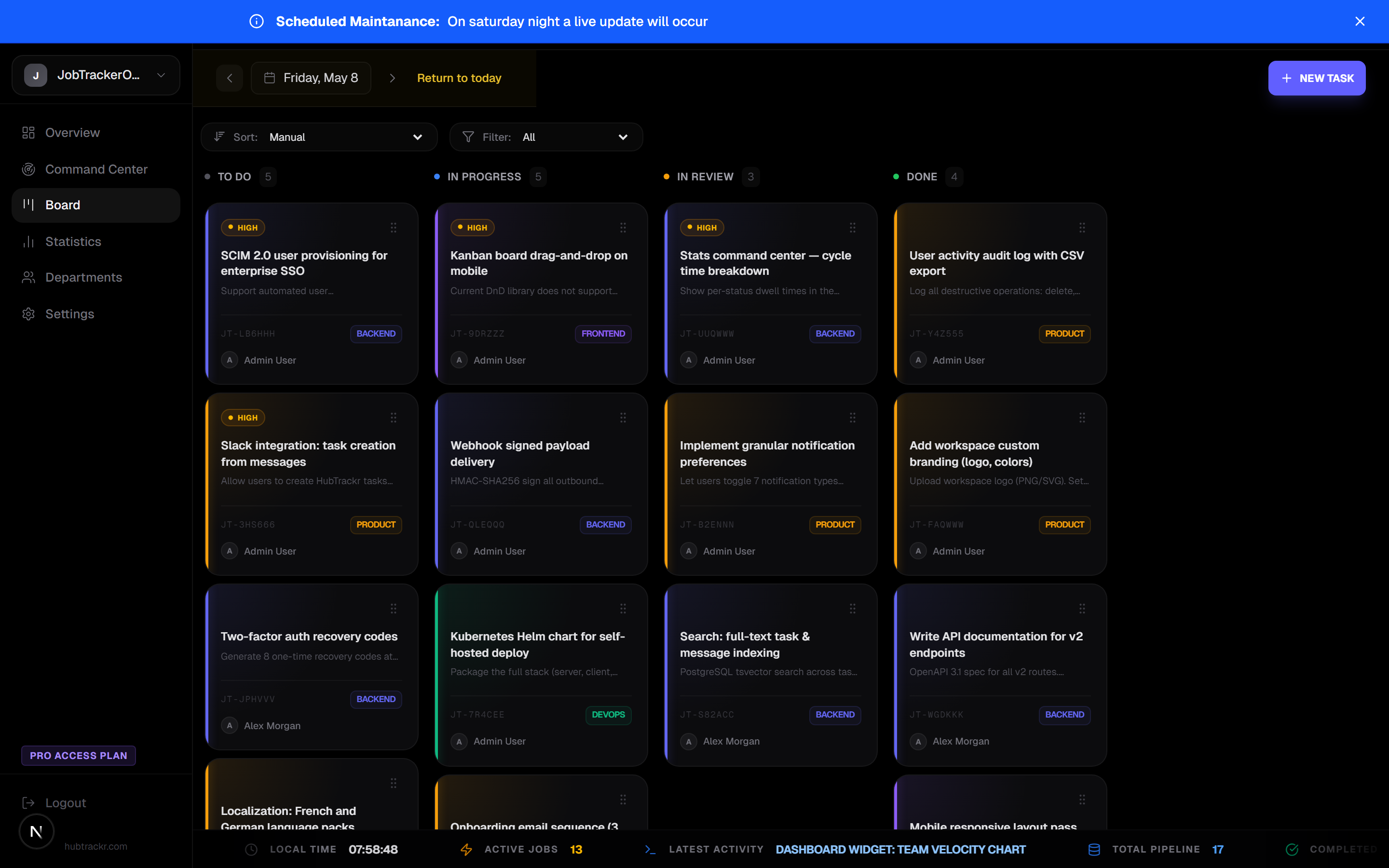
Teams can usually find the card. What gets lost is the review waiting in an inbox, the reason for a revision, and the moment ownership quietly changed hands.
Everyone sees the task, but nobody is sure who owns the next move.
Approvals sit in an inbox until the timeline is already under pressure.
Decisions move through chat, email, meetings, and memory instead of the work record.
Rejected work comes back without a clear reason, owner, or next step.
Managers see late work, but not the system that made it late.
From request to ownership, review, revision, approval, and reporting, HubTrackr keeps the work and the decisions around it in the same system.
The board shows how work moves, who owns the next handoff, and where review risk is building.
Start with context, owner, group, priority, and due date before work moves forward.
Move execution, review, revision, and approval forward without losing the next owner.
Keep submissions, rejects, comments, and requested changes attached to the task.
Use aging work, review pressure, throughput, and revision patterns to improve the workflow.
See the state of every task, owner, blocker, and handoff before the next status check.
Keep every submission, rejection, revision, and approval inside the work record.
Turn daily workflow movement into cycle time, throughput, revision, and bottleneck insight.
HubTrackr makes review decisions part of the work record. Teams can see what was submitted, what changed, who reviewed it, why it was rejected, and when it was approved.
Work enters review with the requester, owner, and context already visible.
Approvers accept, reject, or request changes without moving the decision out of view.
Revision reasons stay explicit, so rework does not disappear into chat history.
The final approval becomes part of the task history and the work record.
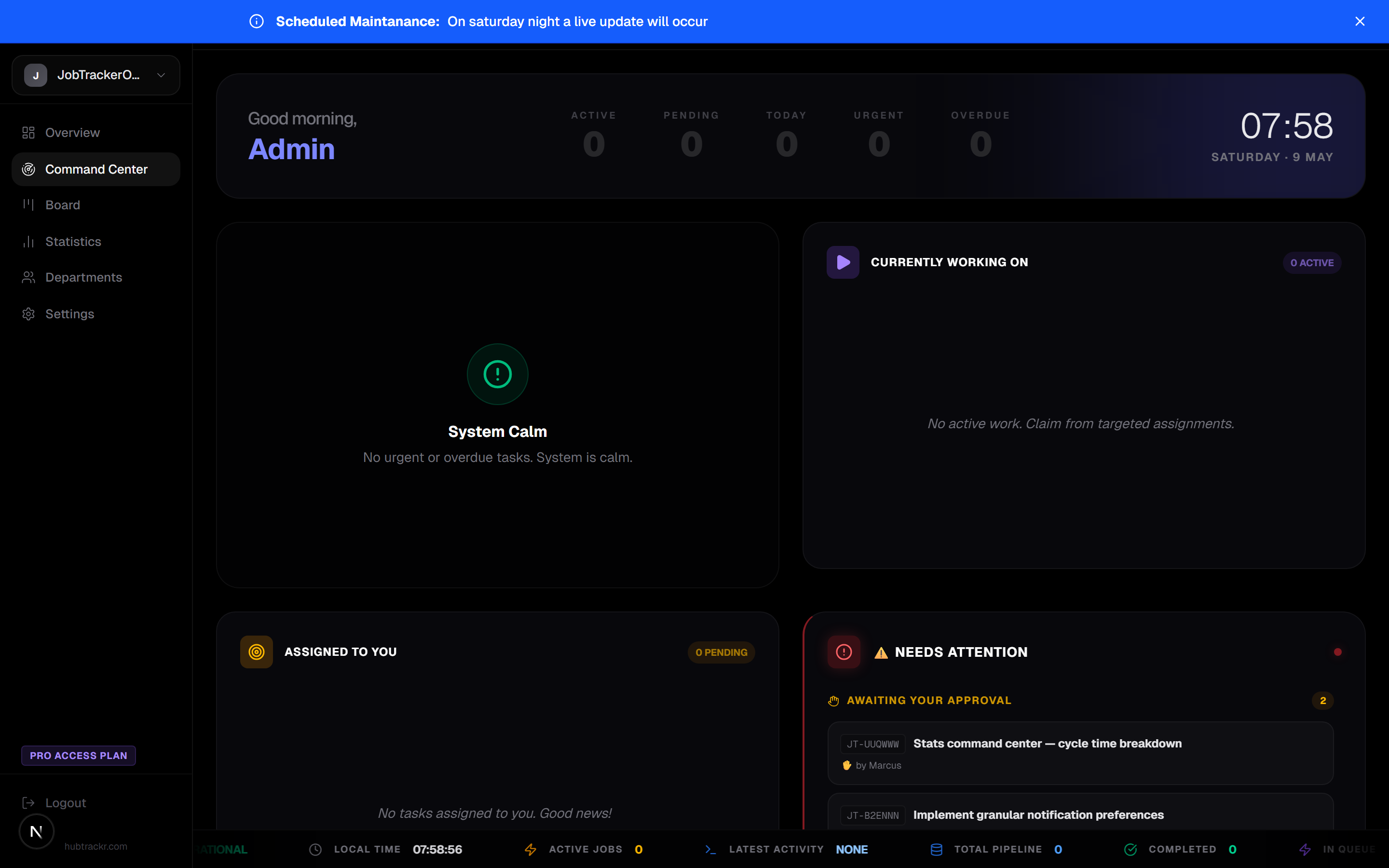
The command center helps managers understand where the workflow slows down, not just which task is late: cycle time, throughput, revision rate, aging work, review pressure, and bottlenecks in one view.
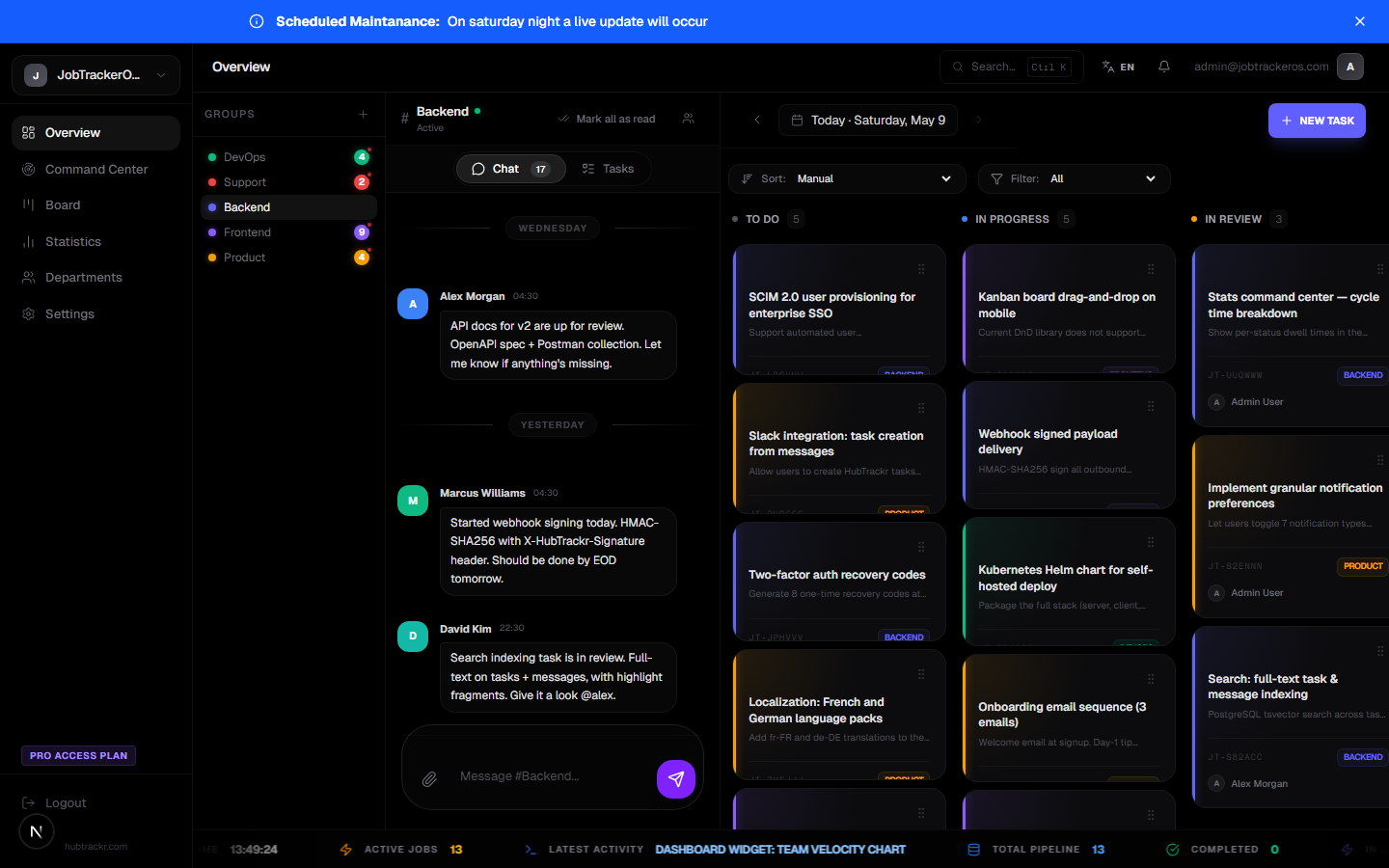
HubTrackr keeps team discussion close to the task, review state, and owner, so important decisions do not vanish into a separate chat stream.
Teams discuss the work with ownership, status, and review state already in view.
Important answers are easier to recover when they live near the work record.
HubTrackr gives project-based teams practical safeguards around access, history, and integrations without turning daily work into a compliance exercise.
Workspace-scoped access, roles, TOTP enrollment in account settings, and session visibility and session records keep access clear as teams and clients expand.
Audit logs and review history preserve approvals, changes, and delays when questions come up.
Outbound webhooks, signed deliveries, SAML SSO support, and SCIM are available when integration and identity controls matter.
HubTrackr fits project-based work that moves through request, execution, review, revision, approval, and delivery.
Keep client deliverables, creative revisions, approvals, and feedback history from scattering across tools.
Track implementation flow, review pressure, ownership changes, and bottlenecks across releases.
Make recurring work, escalations, owners, blockers, and aging requests visible across the team.
Run client and internal projects with clearer ownership, fewer hidden blockers, and cleaner follow-through.
Coordinate external contributors while keeping tasks, revisions, and approval responsibility traceable.
Keep client-facing deliverables, review steps, approvals, and delay history easy to explain.
Capture the request with owner, requester, group, priority, deadline, and context.
Move work into review and make approval responsibility visible.
Keep requested changes, rejected submissions, and updates on the work record.
Use cycle time, throughput, bottlenecks, and revision patterns to improve the system.
We are working with teams that want every owner, review decision, revision, and delay visible before project work slows down.